Plain Hopper
Hoppers • Sri Lanka
About Plain Hopper
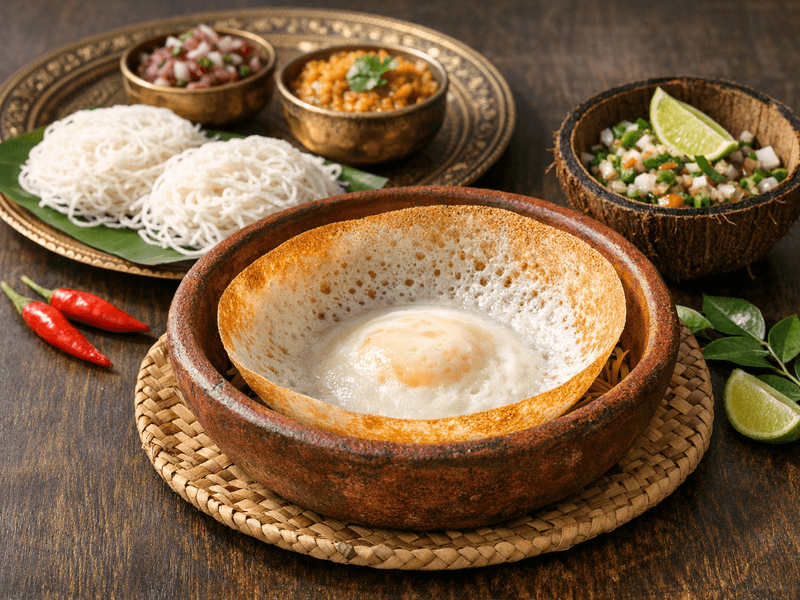
Bowl-shaped fermented rice-and-coconut-milk pancake — crisp edges, soft center. Classic SL breakfast.
How to Make Plain Hopper (Traditional & Healthy Version)
Plain Hopper, known locally as 'Appa', is a beloved Sri Lankan breakfast staple that showcases the country’s unique culinary traditions. Originating from the heart of Sri Lanka, hoppers are bowl-shaped pancakes made primarily from fermented rice flour and coconut milk. The fermentation process lends them a slightly tangy flavor, while the coconut milk brings a subtle richness to the dish. Plain Hopper is celebrated for its crisp edges and soft, airy center, making it a delight to eat both on its own or with a variety of accompaniments. In Sri Lankan culture, hoppers are often served during family gatherings, religious festivals, and special occasions, reflecting their deep-rooted significance. This healthy version of Plain Hopper maintains authenticity while focusing on a balanced nutritional profile, making it ideal for those who are calorie-conscious. Its simplicity and lightness make it a versatile dish that fits seamlessly into modern healthy diets. Whether you’re new to Sri Lankan cuisine or a seasoned enthusiast, Plain Hopper offers a flavorful, nutritious, and satisfying experience.
Ingredients(for 1 medium-sized hopper per serving)
- 1 cup Rice flour (Local: 'batu pittu', finely milled)
- 1 cup Coconut milk (Freshly extracted preferred)
- 1/2 teaspoon Active dry yeast (For fermentation)
- 1 teaspoon Sugar (For activating yeast)
- 1/2 teaspoon Salt (To taste)
- 1/2 cup Water (As needed for batter consistency)
- 1 tablespoon Oil (For greasing hopper pan (coconut oil preferred))
- 1/4 teaspoon Fenugreek seeds (Optional for added flavor) - optional
Instructions
- 1
In a small bowl, dissolve the active dry yeast and sugar in 2 tablespoons of warm water. Allow to rest for 5 minutes until frothy.
5 minutes
Ensure water is just warm, not hot, for yeast activation.
- 2
In a large mixing bowl, combine rice flour and salt. Add the yeast mixture, coconut milk, and water. Mix well to form a smooth, pourable batter.
5 minutes
Whisk thoroughly to avoid lumps and achieve a silky texture.
- 3
Cover the bowl and let the batter ferment in a warm place for 2-3 hours, or until bubbles appear and it slightly rises.
3 hours
Fermentation enhances flavor; longer fermentation yields tangier hoppers.
- 4
If using fenugreek seeds, soak them, grind, and add to the batter after fermentation. Stir well.
2 minutes
Fenugreek adds subtle aroma and aids digestion.
Why This Dish is Healthy
This recipe is a healthy choice due to its minimal use of oil and reliance on whole ingredients. Coconut milk supports heart health and provides satiating fats, while rice flour is gentle on the digestive system. It’s a perfect vegetarian meal that fits well into weight loss and diabetic-friendly diets, offering sustained energy without excess calories.
Plain Hopper is naturally low in calories (130 per serving) and contains a balanced mix of carbohydrates, protein, and healthy fats. The rice flour provides complex carbs, while coconut milk offers medium-chain triglycerides and essential minerals like potassium and magnesium. Fermentation increases digestibility and adds beneficial probiotics. The dish is gluten-free, dairy-free, and contains no added preservatives, making it suitable for sensitive diets.
Pro Tips
- 💡Tip 1: Use freshly grated coconut for richer flavor in coconut milk.
- 💡Tip 2: Proper fermentation is key to achieving the characteristic tang and texture.
- 💡Tip 3: Grease the pan lightly to prevent sticking and maintain crisp edges.
Storage & Serving
Store cooked hoppers in an airtight container at room temperature for up to 12 hours. For longer storage, refrigerate and reheat gently in a steamer or microwave to restore softness.
Best served: Breakfast or Lunch
Nutrition Facts
| Nutrient | Per 100g |
|---|---|
| Energy | 130.0 kcal |
| Protein | 2.4 g |
| Carbohydrates | 24.0 g |
| Total Fat | 2.6 g |
| Fiber | 0.8 g |